- Register
- Log in to Tune-In
- Wishlist (0)
-
Shopping cart
(0)
You have no items in your shopping cart.

Beatles News
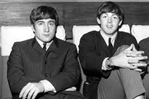
The tape was made by student John Hill in 1964 when he sneaked into a press conference to record the chat but it was never broadcast
John Lennon claimed The Beatles were not very good musicians in a lost interview that has now sold for £3,100 at auction.
The tape was made by a student in 1964 and never broadcast.
John Hill was 18 when he sneaked into a press conference to record the chat – and then forgot about it.
He found the tape in 2014, after it had been in a drawer for 50 years. On the recording, John, then 24, said he would “probably just have been a layabout” if he had not become a Beatle.
He admitted he had been failing at college and revealed: “Some other lads did my exams for me.”
Source: Stephen White/mirror.co.uk
details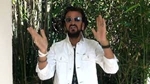
Ringo Starr, the legendary drummer for the iconic band The Beatles,” has always had “peace and love” as his mantra. In a new interview, the 81 year-old spoke out to say that spreading this message is more important now than it ever has been before.
“Well it’s always been important – and I do spread the message,” Starr told Fox News. “I mean, you look at the photos in the ‘60s, we’re all doing this. We loved ’66 when flower power was coming in. It was such a change in those years – people with flowers and loving each other.”
There were a few bad moments, like Kent State and things like that, but we just went right for it,” Starr added, referring to the 1970 tragedy in which the Ohio National Guard opened fire on unarmed college students at a war protest at Kent State University, killing four students and injuring nine others.
“It was part of how we felt,” Starr said of sharing the message then and now. “And I keep doing it now. I do it, I can only have myself do it. I can’t force anybody to be peaceful and loving.”
Source James Conrad/themix.net
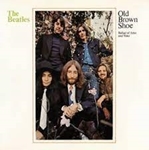
George Harrison rarely strayed from his guitar, but he did for “Old Brown Shoe” twice. He wrote the song on an instrument he barely knew how to play and then added bass to the track in the recording studio.
In his 1980 memoir, I Me Mine, George said he wrote “Old Brown Shoe” on the piano, an instrument he wasn’t very familiar with.
“‘Old Brown Shoe.’ I started the chord sequences on the piano (which I don’t really play) and then began writing ideas for the words from various opposites: ‘I want a love that’s right/ But right is only half of what’s wrong.” Again it’s the duality of things–yes-no, up-down, left-right, right-wrong, etc.”
During an interview with Creem Magazine, George said he liked playing the bass.
He said, “But I do: I think bass is a good instrument because, even without being clever, the part of the bass is really important in the way it holds it all down with the bass drum. I like a bass when it doesn’t get in the way of anything.
Source: cheatsheet.com
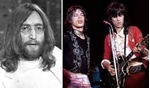
John Lennon compared The Rolling Stones’ “Miss You” to one of his songs. John had a strong reaction to “Miss You.”Listeners in the United States had a similarity strong reaction.
One of The Rolling Stones‘ most famous songs is “Miss You.” John Lennon believed “Miss You” was based on one of his solo songs. On the other hand, The Rolling Stones’ Ron Wood said the song was inspired by a genre that had nothing to do with John’s output.John felt Mick Jagger was influenced by “Bless You.” “I think Mick Jagger took ‘Bless You’ and turned it into ‘Miss You,'” John opined. “‘Wherever you are, child on a shooting star.’ The engineer kept wanting me to speed that up — he said, ‘This is a hit song if you’d just do it fast.’ He was right. ‘Cause as ‘Miss You’ it turned into a hit.”
Source: cheatsheet.com
details
George Harrison was one of the best songwriters of the 20th century, but even he sometimes needed a little help in the songwriting process, especially on “Piggies.” The White Album track contains a lyric from George’s mother, Louise.
However, the song about snooty rich people soon morphed into something disturbing by a notorious cult leader.
In his 1980 memoir, I Me Mine, George said that his mother stepped in to help him write “Piggies” when he needed help.
“‘Piggies’ is a social comment,” he wrote. “I was stuck for one line in the middle until my mother came up with the lyric ‘What they need’s a damn good whacking!’ (a damned good throttling), which is a nice simple way of saying they need a good hiding. It needed to rhyme with ‘backing,’ ‘lacking.'”
George had no clue he’d be giving some dangerous people bad ideas.
Source: cheatsheet.com
details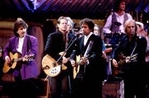
Tom Petty said George Harrison “invented the idea of rock ‘n’ roll giving back to the people.” George sprung into action when his friend Ravi Shankar asked him for help with the humanitarian crisis in Bangladesh in 1971. With George’s star power and a star-studded lineup, George organized the Concert for Bangladesh and raised thousands of dollars for the Bangladeshi people. A devastating cyclone had killed 300,000 people. After months of inaction from the West Pakistani government, people wanted a change, and Eastern nationals declared themselves the independent country of Bangladesh. It started a bloody war with the Western Pakistani troops committing genocidal acts on the Bangladeshi people.
Source: cheatsheet.com
details
Once George started writing songs, his and Paul’s relationship started cracking.
Paul, John Lennon, and The Beatles’ producer, George Martin, acted condescendingly when he came forward with his tunes. George felt like a junior member, and Paul started treating him like a glorified session man. Paul told George to play what he wanted, and George was rarely able to give his input. Meanwhile, George had to help Paul do tons of his songs before Paul even considered recording one of George’s.
Source: cheatsheet.com
details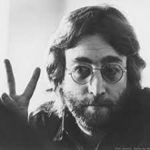
Singer-songwriter Joan Osborne, this year’s headliner and honoree for the 42nd annual benefit concert honoring the late John Lennon, has long drawn inspiration from his unparalleled career.
“Lennon’s songs always showed me that music is a way for us to tell our deepest truths — to ourselves, to each other and to the wider world,” said Osborne, who will be joined Oct. 8 by fellow artists including Willie Nile and Catherine Russell at the annual celebration of the Rock and Roll Hall of Famer.
The John Lennon Tribute show will include songs dating from his days with the Beatles, including material from a pair of classic Fab Four albums: “Rubber Soul” and “Revolver.”
Tickets are already on sale for the show at Symphony Space in Manhattan, with the event slated for the day before what would have been Lennon’s 82nd birthday. He was just 40 when shot to death by a deranged fan outside his Upper West Side home on the night of Dec. 8, 1980.
Source: Larry McShane/nydailynews.com
details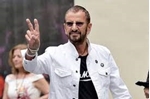
Ringo Starr is celebrating his 82nd birthday on July 7 by gathering in Los Angeles for his annual Peace & Love Birthday event with his family, friends, and bandmates, and sending his message out to space.
At noon, when Starr gives his traditional “Peace and Love” exclamation, the Artemis Mission Control Center in Houston, Texas will beam his message and music—Starr’s 2021 single “Let’s Change The World” and “Star Song,” the music the stars made upon his birth as mapped out by Artemis—to the International Space Station, where it will “orbit around the Earth, passing over many countries and much of the Earth’s population and beam back down messages of peace and love while also traveling out to distant stars,” according to an official descriptor of the event.
Source: americansongwriter.com
details
It's probably fair to say that each of the Fab Four achieved a sort of musical immortality thanks to their time with the Beatles. At the 2022 Glastonbury festival, Yahoo! News reports, Paul McCartney was the star of the show, the oldest musician to headline the event in its history. The 80-year-old's set reached a viewership of 3.9 million people on the UK's BBC One, and the weekend as a whole shattered streaming records.
Still, it's not all about flexing a life-long license to rock out and being incredibly rich. the Beatles, of course, were and remain adored around the world, perhaps the most beloved band in history. According to Britannica, the term "Beatlemania" began to be used by the British press as early as 1963, and the scale of it all just increased from there.
Source: Chris Littlechild/grunge.com
details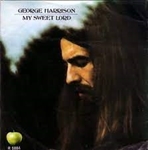
George Harrison had enough to deal with during the making of All Things Must Pass, and deciding whether or not to make “My Sweet Lord” into a single was just another dilemma.
George had just left one of the most famous bands in history, The Beatles, and although he often felt constipated in the band, he didn’t quite know what he wanted to do now that he was set free. He knew he had a stockpile of songs but didn’t know whether he wanted to release them.
There were other issues in his life as well. His mother died, his marriage was disintegrating, and he’d recently purchased a run-down mansion. Regardless of what was going on around him, though, George embarked on what was one of his most creative periods. It was a very dualistic time for him, but he had the album all mapped out before he even set foot in the recording studio.
Source: cheatsheet.com
details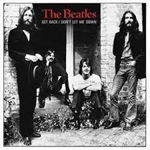
The Beatles released a hit called “Don’t Let Me Down” near the end of their time together. Subsequently, a 2010s group created a song with the same title that was more successful. The group recruited a popular singer to perform vocals on the song.
In the 1997 book Paul McCartney: Many Years From Now, Paul discussed the origin of “Don’t Let Me Down.” “I think it was a genuine cry for help,” said. “It was a good song. We recorded it in the basement of Apple for Let It Be and later did it up on the roof for the film. We went through it quite a lot for this one.”
Paul discussed his role in recording the track. “I sang harmony on it, which makes me wonder if I helped with a couple of words, but I don’t think so,” he said.” It was John’s song.”
Source: cheatsheet.com
details
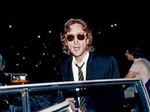
The death of John Lennon is a tragic chapter in the story of The Beatles.
On December 8 1980, the 40-year-old was gunned down in the archway of his Manhattan home. Crazed fan Mark David Chapman shot Lennon four times from close range and despite being rushed to hospital, the former Beatle died.
The world was well and truly shaken, as 30,000 fans gathered in Liverpool for ten minutes silence to remember their hometown hero, as well as over over 225,000 in Central Park, New York.
Despite the mass mourning, there was no official funeral for John, with Yoko Ono releasing a statement the day after his death. She said: "There is no funeral for John. John loved and prayed for the human race. Please do the same for him. Love, Yoko and Sean."
His remains were cremated at Ferncliff Cemetery in Hartsdale, Westchester County, New York. His former bandmates reacted differently to the news.
Source: Aaron Curran/liverpoolecho.co.uk
details
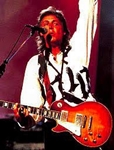
Paul McCartney almost always appeared with the Beatles playing a bass: typically either a Höfner 500/1 or Rickenbacker 4001S.
But from the earliest days of his long musical career, McCartney was drawn to the guitar, reaching for a six-string in the studio with the Beatles and Wings, as well as on solo recordings.
In this gem from the GP archives, Macca discusses how he ended up playing bass in the Beatles, the tortoise and hare race of melody versus speed, and why he likes heavy metal.
The following interview extract originally appeared in the July 1990 issue of Guitar Player…
Source: Tom Mulhern, Rod Brakes/guitarplayer.com
details
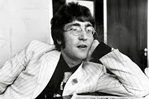
After The Beatles split up, Paul McCartney, John Lennon, George Harrison, and Ringo Starr embarked on solo careers. As they worked together for years, reporters often asked what they thought about the others’ work. When Lennon spoke about Harrison’s solo career, he was slightly dismissive. He explained that he felt Harrison’s talents developed as a direct result of working with Lennon and McCartney.When Harrison joined The Beatles, he was still a teenager. Harrison greatly admired his older bandmates, including Lennon.
“He told me he really, really admired John,” Tom Petty told Rolling Stone. “He probably wanted John’s acceptance pretty bad, you know?”
“I’d put on ‘Paperback Writer’ and say, ‘I love the guitar on that,’ and he’d say,’ “Oh, that’s Paul.’ I put all these other Beatles tracks on: ‘Oh, that’s Paul,'” Peter Frampton told the Daily Mail. “It wasn’t until then I realized he had been stifled. It was very frustrating for George.”
Source: cheatsheet.com