- Register
- Log in to Tune-In
- Wishlist (0)
-
Shopping cart
(0)
You have no items in your shopping cart.

Beatles News
Sean Ono Lennon took to X over the weekend to clarify how his late father, John Lennon, provided for him and his half brother Julian Lennon before the former Beatles’ tragic murder in 1980.
Replying to a post on Sunday (Oct. 11) in which someone presumed, “One guy inherited most of the estate, the other largely cut out and forced to engaged in decades-long litigation in pursuit of a comparatively small share of it. Unbearably painful and enraging for the one, surely pretty darn awkward for the other. That they remain friends (and largely always were) is testimony to the redemptive power of being a chill dude with broad implications for the wider world.”
The comment was tied to a post from Sean a day earlier of the Lennon brothers enjoying a nice day out in nature to celebrate his 51st birthday and, according to Sean, the commenter got it all wrong.
“Julian and I inherited the same amount from our dad,” he wrote. “Our trusts were equal. Although his was slightly more, but negligibly so.”
Sean is the adult son of John and wife Yoko Ono and Julian, 63, is Lennon’s eldest, from his six-year marriage to his first wife, Cynthia Lennon. The men appear to h details
During the Beatles‘ heyday, by all accounts, Paul McCartney and John Lennon had a loving, as well as deeply competitive, personal relationship. And while it ended in messy animosity during the Fab Four’s breakup in 1970 and in a series of thinly veiled musical shots they took at each other in their solo material in the years after — check out McCartney’s “Too Many People” and “Silly Love Songs” and Lennon’s “How Do You Sleep?” — in the end they made peace before Lennon’s murder in 1980.
But, as it turns out, there is still one sore subject you can bring up about the two men that will get McCartney riled up: their heights.
On this week’s new episode of the pod Good Hang with Amy Poehler, the Parks and Recreation star waded into the subject with a simple question about the age gap between the Beatles, which unexpectedly turned into a Macca rant about the one fact about the band that he thinks filmmakers keep screwing up.
“George was how many years younger than you, Paul?,” Poehler asked. “I think like about one and a half [years younger],” he said of the late Beatles guitarist/singer, noting that Len details
The song was released in 1970.
Typically, one-hit wonders are pop songs repeatedly blasted on the Top 40 Radio for a year or so before becoming culturally irrelevant and largely forgotten. However, some one-hit wonders are released by rock bands, as evidenced by Collider‘s recent ranking of “The 10 Best Classic Rock One-Hit Wonders.”
The list, published on September 29, included classic rock songs like 1972’s “Dancing in the Moonlight” by King Harvest, “Come On Eileen” by Dexys Midnight Runners from 1982, and “Because the Night” by Patti Smith Group, released in 1978. Collider named the Jim Gordon and Eric Clapton-penned track “Layla,” off Derek and the Dominos‘ record Layla and Other Assorted Love Songs, the “best classic rock one-hit wonder.”
According to Collider, while “Layla” is a beloved classic rock tune, Derek and the Dominos didn’t put out another record after Layla and Other Assorted Love Songs, their first and only album. As fans are aware, Derek and the Dominos split in 1971, just a year after the band was formed. Pattie Boyd Revealed How She Felt About ‘Layla’ in Her 2 details
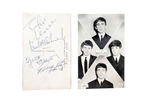
A rare vintage postcard with autographs of all four members of The Beatles is set to fetch thousands after being kept by a lunch lady for 63 years.
Rose Moulder served with Birmingham City Council's Catering Services where she was responsible for providing hospitality to artists performing at the city's Town Hall between October 1961 and March 1969.
They included world-famous musicians such as The Beatles, The Rolling Stones, Jerry Lee Lewis, The Kinks and Bob Dylan with Rose collecting all their autographs and keeping them safe at her home.
Rose passed away several years ago and now her cherished collection is set to go under the hammer at Auctioneum Ltd in Bristol where it could sell for over $5,370.
Auctioneer Andrew Stowe, from Auctioneum Ltd, said: "It's one of the most exciting collections I've ever seen. "There are seven autograph albums, each being a veritable 'who's who' of acts from the period. "Every turn of a page reveals another icon.
"Plus a large quantity of programs and signed photographs." The collection features seven autograph albums as well as postcards and programs. The highlight, Andrew says, is a postcard autographed by John Lennon, Paul McCartne details
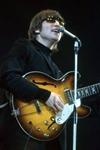
"Imagine" was released as a single on Oct. 11, 1971, and became one of John Lennon's defining songs
After his 1980 murder, its message of peace took on new meaning. Today, it remains a lasting symbol of Lennon's legacy
Fifty-five years ago today, John Lennon released "Imagine," a song that would become one of the most recognizable recordings of his solo career. The single was built around Lennon's gentle piano and restrained vocals, presenting a simple but ambitious vision of a world without division.
"Imagine" paired an accessible melody with lyrics that challenged ideas about religion, nationalism and material possessions. Its message of peace would eventually become inseparable from Lennon's legacy, particularly after his death.
According to History, Lennon began writing "Imagine" amid the Vietnam War while still part of the Beatles, drawing heavily on ideas from Yoko Ono, whose poetry collection Grapefruit helped shape the song's concept and eventually led to her being given an official co-writing credit in 2017.
Lennon recorded "Imagine" at Tittenhurst Park, his country home with Ono, working with producer Phil Spector nearly a year after the Beatles publicly split in details
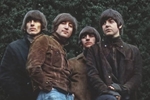
The Beatles’ Rubber Soul reenters the Billboard 200 at No. 4 on the chart dated Oct. 17, thanks to the release of an expanded, deluxe edition. The album first appeared in the top 10 on Jan. 8, 1966, when it shot from No. 60 to No. 1, dethroning Herb Alpert’s Tijuana Brass’ megahit Whipped Cream & Other Delights. Rubber Soul remained on top for six consecutive weeks before Whipped Cream returned to the top spot.
Rubber Soul contains numerous Fab Four classics, including “Norwegian Wood (This Bird Has Flown),” “You Won’t See Me,” “Michelle” and “In My Life.”
We thought it would be fun to take a look back at the top 10 the week Rubber Soul first cracked the region. It was jam-packed with superstars, including The Rolling Stones, Elvis Presley, Barbra Streisand and two albums by Alpert & the TJB.
Three of the albums in that top 10 that week received Grammy nominations for album of the year: Whipped Cream, Eddy Arnold’s country smash My World and the blockbuster soundtrack to The Sound of Music. In addition, Whipped Cream contained the record of the year Grammy winner, the zesty instrumental “A Taste of Honey.” R details
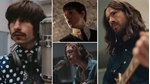
Sam Mendes' Neal Street Productions co-founder Pippa Harris said at the London Film Festival: "It doesn't necessarily mean we're thinking that people will go and see all four films on the same day."
More intel on Sony‘s distribution plan for Sam Mendes‘ hotly anticipated Beatles films has arrived.
Paul Mescal, Harris Dickinson, Joseph Quinn and Barry Keoghan will play Paul McCartney, John Lennon, George Harrison and Ringo Starr, respectively, with the four features currently slated to release in the same month in 2028.
Internet-savvy fans will have noticed a swathe of social media videos of the actors in costume filming around London over the last few months. For example, in August, they were spotted re-creating the group’s iconic Abbey Road album cover. The original photo, taken on Aug. 8, 1969, features the Fab Four walking in single file across a crosswalk outside EMI Studios in London.
On Monday, Mendes’ long-time producing partner, co-founder of the pair’s Neal Street Productions, Pippa Harris, sat for a keynote session at the BFI London Film Festival’s Industry Forum. She provided a coy update on the rollout, currently described as a “four-film cinemat details
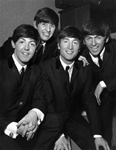
In 1971, John Lennon released what would become one of the defining songs of his solo career. Fifty-five years later, "Imagine" has not only endured, it has been ranked the greatest song of all time.
"Imagine" was released as a single in the United States on Oct. 11, 1971, following the September release of Lennon's album of the same name.
More than five decades later, author Carolyn McHugh put the song at No. 1 in her book "The 100 Greatest Songs of All Time: Create Your Ultimate Playlist," released in December 2025. McHugh's book ranks 100 songs spanning pop, rock, soul, folk and funk, with "Imagine" beating out every other track for the top spot. In fact, Lennon narrowly beat his former bandmates: The Beatles' "Yesterday" landed at No. 2. The Beatles also placed "I Want to Hold Your Hand" at No. 7 and "Hey Jude" at No. 39.
McHugh describes "Imagine" as one of Lennon's most enduring works, praising its "powerful message of hope, peace and unity," as well as its "simple, yet profound lyrics" and "hauntingly beautiful melody."
The song's origins stretch back to Lennon's years with The Beatles. According to HISTORY, Lennon began writing "Imagine" while he was still a member o details
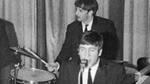
The Beatles made their first single three separate times in 1962, and on each of those three days a different man was sitting behind the drums. This is not a fan theory anyone had to reconstruct: the liner notes on the band's own Anthology state it flatly that "The Beatles recorded Love Me Do three times in 1962 – on 6 June, and 4 and 11 September 1962 – on each occasion with a different drummer."
The Lost Pete Best Session
The first attempt came on Wednesday, June 6, 1962, in Studio Two at EMI's studios on Abbey Road, with Pete Best on the kit. George Martin, the Parlophone A&R man who had agreed to meet the group on the reasoning that he had nothing to lose, got four songs onto tape that night: "Besame Mucho," "Love Me Do," "P.S. I Love You" and "Ask Me Why."
None of the four was released, and only two of them survived in EMI's vaults at all, which meant that the "Love Me Do" recorded that evening—slower than the one you know, with John Lennon's harmonica opening it—sat unheard by anybody outside the building for the next three decades.
Ten weeks later, Best was gone. On the morning of August 16, road manager Neil Aspinall drove him into Liverpool and dropped him in Whi details
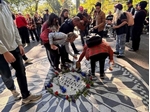
Hundreds of Beatles and John Lennon fans and dozens of musicians today came together to celebrate Lennon’s birthday in Strawberry Fields, singing, dancing, leaving flowers and otherwise paying tribute to the man and the music that continues to echo daily here.
Although Strawberry Fields is already a Guinness Book of World Records music marathon, musicians from New York and around the globe gathered for a kind of all-day John Lennon jam session.
Lennon was born on October 9, 1940, and died on December 8, 1980, just blocks away, with singers programmed now daily in Strawberry Fields, although today performers were welcomed to join in the jam.
“Today, there’s nobody booked on the list,” said David Muniz, the keeper of the list who programs performers daily. “Anybody can come here and play today. We have bands that show up regularly on the anniversary.”
A big band, mostly people joining for the day, played Beatles songs, beneath lights set up for the night, with a brown paper bag not collecting money, but filled with guitar picks for musicians and memories, on the mosaic.
The Core Seven, key musicians in the day-long marathon, including many from Queens, to details
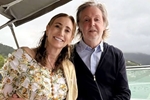
Paul McCartney and Nancy Shevell celebrated 15 years of marriage on Oct. 9. “Happy Nanniversary to all of us!” the Beatles musician wrote in a post on Instagram.The couple married in a small London ceremony in 2011 after meeting in the Hamptons in 2007
Paul McCartney and Nancy Shevell are celebrating 15 years as husband and wife.
The Beatles legend, 84, paid tribute to his wife, 66, in a heartfelt post on Instagram, sharing a photo of them out for a boat ride to commemorate the occasion. This marks 15 years of marriage for the couple, who wed in 2011.
In the photo, McCartney donned a blue-and-white striped button-up beneath a black zip-up hoodie and blue slacks, while Shevell opted for a yellow floral blouse, a matching silky shawl and cream-colored pants for the breezy outing.
Last year, for their 14th anniversary, McCartney once again kept his affectionate message short and sweet: “Happy Anniversary to my lovely missus, Nancy - Paul,” he wrote in a post on Instagram.
McCartney and Shevell first met in the summer of 2007 while staying at their respective properties in the Hamptons, PEOPLE previously reported. At the time, a source told PEOPLE the couple was &ldquo details
Fans of music legend John Lennon are marking what would have been his 86th birthday today, October 9. The Beatles songwriter was murdered on December 8, 1980, when he was shot outside his Manhattan residence by Mark David Chapman. He was rushed to hospital in the back of a police vehicle, but was pronounced dead upon arrival. He was 40 years old.
The Liverpool music legend was departing his home with his wife Yoko Ono when Chapman, who was later jailed for life and remains behind bars to this day, seized the moment to shoot him, later citing John's controversial remark about the Beatles being 'more popular than Jesus' as his primary motivation.
The killing sent shockwaves across the globe, particularly affecting his former Beatles bandmates, who have subsequently spoken candidly about losing their friend. During a 1981 interview with Barbara Walters, Beatles drummer Ringo Starr recalled the devastating moment he learned John had been shot while talking on the telephone with his wife Barbara Bach's daughter Francesca Gregorini while they were in Barbados, reports the Express.
"And so, that drove me crazy," Ringo said, before explaining his initial assumption was that he'd been shot in the leg or the arm. details
Fans of music legend John Lennon are marking what would have been his 86th birthday today, October 9. The Beatles songwriter was murdered on December 8, 1980, when he was shot outside his Manhattan residence by Mark David Chapman. He was rushed to hospital in the back of a police vehicle, but was pronounced dead upon arrival. He was 40 years old.
The Liverpool music legend was departing his home with his wife Yoko Ono when Chapman, who was later jailed for life and remains behind bars to this day, seized the moment to shoot him, later citing John's controversial remark about the Beatles being 'more popular than Jesus' as his primary motivation.
The killing sent shockwaves across the globe, particularly affecting his former Beatles bandmates, who have subsequently spoken candidly about losing their friend. During a 1981 interview with Barbara Walters, Beatles drummer Ringo Starr recalled the devastating moment he learned John had been shot while talking on the telephone with his wife Barbara Bach's daughter Francesca Gregorini while they were in Barbados, reports the Express.
"And so, that drove me crazy," Ringo said, before explaining his initial assumption was that he'd been shot in the leg or the arm. details
Sixty-one years ago today, one of the most iconic tracks of all time, which was ranked the “Absolute Best Song in History” more than 50 years later, hit No. 1. The fact that The Beatles’ “Yesterday” has continued to be celebrated across generations of listeners is especially noteworthy since it nearly wasn’t released for a fascinating reason.
‘Yesterday’ by the Beatles Hit No. 1 on October 9, 1965
After The Beatles’ “Yesterday” was first released on September 13, 1965, the song quickly rose in popularity. Less than a month later, on October 9, 1965, it reached No. 1 on the Billboard Hot 100 and stayed there for a total of four weeks. The only tracks from the legendary rock band that stayed at No. 1 for longer than that are “Hey Jude,” “I Want to Hold Your Hand,” “Get Back,” and “Can’t Buy Me Love.”
Why ‘Yesterday’ by the Beatles Almost Wasn’t Released
On September 13, 2020, Ultimate Classic Rock released an article that chronicled how The Beatles’ “Yesterday” began its journey to leaving a mark on music history. It noted the well-known story that th details
Paul McCartney has penned some words on how they shot the iconic cover for The Beatles‘ ‘Rubber Soul’ for the re-release of their classic 1965 album. Check them out exclusively on NME below.
The Fab Four’s landmark sixth album is currently heading to Number One in the UK charts, 60 years after its original release. Released last week (Friday October 2), the expanded edition comes presented in new stereo and Dolby Atmos mixes, and with a box-set alongside the original mono mix and the original Capitol US Album version mixed by producer Giles Martin and engineer Sam Okell.
As well as the original tracklist – which features fan-favourites including ‘Norwegian Wood (This Bird Has Flown)’, ‘Nowhere Man’, ‘Michelle’, and ‘In My Life’ – there is also be the contemporary double A-side single, ‘Day Tripper / We Can Work It Out’, and a selection of previously unreleased session recordings and home demos.
The Super Deluxe Special Edition Super comes as either a 5-LP box-set or a 4-CD box-set, with 68 tracks and an 88-page hardbound book featuring a brand new written introduction by McCartney, and a foreword compiled from details