- Register
- Log in to Tune-In
- Wishlist (0)
-
Shopping cart
(0)
You have no items in your shopping cart.

Beatles News
George Harrison wrote “See Yourself” with some interesting inspiration in mind. He wrote it around the time Paul McCartney first told the press that he took LSD. The song was George’s way of telling his bandmate to be careful of his actions. “‘See Yourself’ is directly related to taking the drug LSD and Paul’s experience with the press,” George wrote. “John and I had taken it for about two years before it was publicised. After having had that experience we (John and I) wanted the others to know about it because suddenly there seemed to be a big space between us and the other two.“Ringo then had some but Paul would not take it. After about two years he finally did, and somehow then it all came out in the papers.”
Source: cheatsheet.com
details
A Hard Day’s Night was released at the height of Beatlemania in 1964 and fans flocked to theaters to see John Lennon, Paul McCartney, George Harrison, and Ringo Starr in their first film. Directed by Richard Lester, who would also do their 1965 follow-up Help!, the comedy would go on to influence British television and cinema. Now it’s available in 4K as one of this month’s The Criterion Collection offerings.
If you’re a diehard fan of the Beatles then this set is a no-brainer purchase. The 4K digital restoration looks great and the classic tunes that play throughout sound great in the 5.1 surround mix. The film was shot in black and white, which gives it an interesting documentary feel, but it’s incredible seeing the fresh-faced “Fab Four” in high definition. It’s a wonderful time capsule of British culture that winds up being entertaining no matter if you adore the band or not.
Source: Tyler Treese/comingsoon.net
details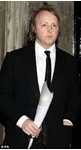
Paul McCartney’s Son, 44, Is The SpittingImage of His Famous Dad While Shopping InLondon
No need to ‘work it out’ – it’s obvious who James McCartney’s father is because the man looked like the exact clone of Paul McCartney while out and about in London.
Sir Paul McCartney once sang, “I’ve just seen a face / I can’t forget the time or place,” and that was a feeling many Beatles fans felt when they saw his son, James McCartney, out and about on Monday (Jan. 24). In the photos taken of him, James, 44, was the spitting image of his famous father. He has the same eyes, forehead, and bushy beard as Paul, 79, during the late 1960s. James wasn’t on his way to play the rooftop of the Apple Corps building in Saville Row. Instead, he was doing a bit of shopping in London. James braved the British winter with a giant green puffer jacket but wore black slacks and a pair of open sandals.
Source: Jason Brow/hollywoodlife.com
details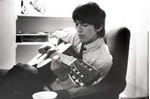
The first song that George Harrison wrote for The Beatles was “Don’t Bother Me.” Initially, when George joined the band, he wasn’t a songwriter. He left that duty to John Lennon and Paul McCartney. Since they seemed capable of writing The Beatles’ hits, George didn’t even think about writing songs.
However, George was still curious to see if he could. The result was 1963’s “Don’t Bother Me,” but George was its harshest critic.
“To get it straight, if I hadn’t been with John and Paul I probably wouldn’t have thought about writing a song, at least not until much later,” George explained. “They were writing all these songs, many of which I thought were great. Some were just average, but, obviously, a high percentage were quality material. I thought to myself, ‘If they can do it, I’m going to have a go.'”
So, George set to work writing his first song, although not in the best of circumstances.
Source: cheatsheet.com
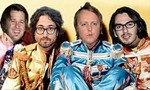
They're four of the most famous musicians in history, regarded as one of the most influential bands of all time.
But outside of their careers as rockstars, all four of The Beatles were fathers - with the fab four sharing 11 children between them.
Yesterday, photos went viral showing James McCartney - who is also a musician - looking just like his rocker father Paul.
But what happened to the rest of the Beatles' children?
From household name Stella McCartney - who has designed royal wedding dresses and Olympic outfits - to the lesser known Jason Starkey who has followed in his father Ringo's drummer footsteps, all the the band's offspring have paved their way in creative fields.
Source: Bridie Pearson-jones, Jessica Green/dailymail.co.uk
details
On this day in 1958, Paul McCartney and John Lennon performed together for the first time at the Cavern Club in Liverpool.
Billed as The Quarry Men Skiffle Group, the group supported the Merseysippi Jazz Band at the historical venue, which opened its doors just one year prior to the performance and caught the emergence of the Merseybeat scene. The club quickly became world-famous, most notably due to the volume of Beatles performances that took place there between 1961 and 1963, and is now synonymous with the band. McCartney most recently visited the venue in 2018, when he played a surprise show for 250 fans.
Source: genesis-publications.com
details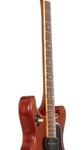
John Lennon’s coat from the “Magical Mystery Tour” film, his cape from “Help!,” three guitars, and Paul McCartney’s handwritten arrangement notes for “Hey Jude” — all from John’s son Julian’s private collection — are going up for NFT auction on Feb. 7, the first in a series to be rolled out over the coming months. “Lennon Connection: The NFT Collection” is presented by NFT marketplace YellowHeart and Julien’s Auctions.
The auction, the first all-NFT effort mounted by Julien’s Auctions, will open for bidding January 24 and commence in real time and in lot order for live bidding at 10:00 a.m. Pacific Time on February 7, 2022, live in Beverly Hills and online at juliensauctions.com.
Each item will be offered as an audio/visual collectible, with a personal narration from Julian. Descriptions and videos of the items appear below; the items themselves are not up for auction.
Source: Jem Aswad/variety.com
details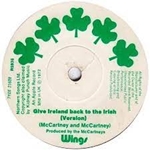
SIR PAUL McCartney wrote his famous 1970s protest song Give Ireland Back To The Irish after seeing footage of Bloody Sunday.
The former Beatle was in the US at the time when on January 30, 1972, British Paratroopers opened fire at a civil rights march in Derry killing 14 people dead.
The 79-year-old musician said it was "deeply troubling" to see footage of a perfectly peaceful demonstration go wrong.
The song, which was banned by the BBC, went on to be a number one in the Republic.
Sunday Life reported the details from his new book, The Lyrics, written in collaboration with acclaimed Northern Ireland poet Paul Muldoon.
Source: irishnews.com
details
MerleFest, presented by Window World, is proud to announce the next round of artist additions for MerleFest 2022, which will be held April 28-May 1, 2022.
Trampled By Turtles, Colin Hay, and The Steel Wheels will join an already outstanding lineup which includes performances by Emmylou Harris, Greensky Bluegrass, Rissi Palmer, Old Crow Medicine Show, Nitty Gritty Dirt Band, Steep Canyon Rangers, Allison Russell, We Banjo 3, and more. MerleFest is the annual homecoming of musicians and music fans held on the campus of Wilkes Community College in Wilkesboro, North Carolina.
Hogslop String Band will be hosting this year's late night jam. Jam guest artists will be announced in the coming weeks. Additional fan favorites announced today include Barbaro, Big Daddy Love, The Contenders, Damn Tall Buildings, David Childers and The Serpents, Desure, Eli Yacinthe, Jake Blount, Kaia Kater, Nat Myers, Shannon McNally, Shay Martin Lovette, Sister Sadie, Tenille Townes, Time Sawyer, and Tray Wellington.
Source: Michael Major/broadwayworld.com
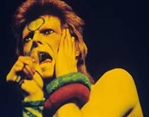
During an interview, David Bowie said The Beatles inspired his hit “Space Oddity.” Bowie subsequently contrasted his lyrics with John Lennon‘s. Bowie also explained why he drew from other artists in his songs.
According to the book Bowie on Bowie: Interview and Encounters with David Bowie, the “Let’s Dance” singer discussed his music in a 1973 interview with NME. NME noted the use of puns in “Space Oddity.” “I must own up to The Beatles for creating that kind of feeling,” Bowie said. “The one thing that I really adored about [John] Lennon’s writing was his use of the pun, which was exceedingly good. I don’t think anyone has ever bettered Lennon’s use of the pun.”
Bowie compared his use of puns to Lennon’s. “I played on it more; Lennon would throw it away in one line,” Bowie opined. “I tend to build a song upon it. I treat my puns a lot more seriously.”
Source: cheatsheet.com
details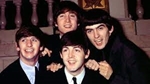
Thanks to its massive success, the world-renowned rock band The Beatles is widely regarded as one of the pioneers of the genre. Even though some fans and artists have been saying these days that rock is dead, The Beatles still carries the genre seriously.
Started its career in 1960 in Liverpool, The Beatles‘ original line-up was John Lennon on vocals, Paul McCartney on bass, George Harrison on guitars, and Ringo Starr on drums. Activating just 10 years until 1970, the band’s legendary line-up Paul McCartney, Ringo Starr, George Harrison, and John Lennon were presented to rock music because of their band’s world success.
Throughout their 10-year full of a successful career, The Beatles‘ discography included 13 studio albums in their core catalog while including 21 studio albums worldwide. In addition to those, The Beatles released 54 compilation albums, 22 video albums, 36 EPs, 17 box sets, and many more things.
Source: metalcastle.net
details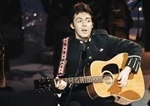
For many Beatles fans, Paul McCartney may be one of the greatest songwriters of all time. His and John Lennon’s Beatles songs dominated the band’s catalog. Then McCartney continued writing songs for his subsequent bands. McCartney himself looks back on other songwriters, like Cole Porter, whose writing inspired “Here, There and Everywhere.”McCartney was a guest on the Fresh Air podcast on Nov. 3. He was there to discuss his book, Paul McCartney: The Lyrics, a compendium of all his lyrics from the Beatles songs and beyond. It was also just before The Beatles: Get Back premiered on Disney+. Host Terry Gross followed up on something he wrote about “Here, There and Everywhere” and McCartney explained.
Source: cheatsheet.com
details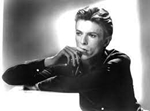
George Harrison wrote the song “Try Some, Buy Some,” which became a minor hit for Ronnie Spector, a former member of The Ronettes. George later released his version of the song. During an interview, David Bowie revealed why “Try Some, Buy Some” mattered so much to him.
In 2003, Bowie released an album called Reality. Reality includes a few cover songs, including a cover of “Try Some, Buy Some.” During a 2003 interview published in Vice, Bowie discussed his reaction to the song.
“George’s song, ‘Try Some, Buy Some,’ means a lot to me now,” Bowie revealed. “When I first heard that song it had a very different narrative to it. Now my connection to the song is about leaving a way of life behind me and finding something new.”
Source: cheatsheet.com
details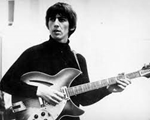
During an interview, George Harrison explained the meaning of “Isn’t It a Pity?” He discussed why he wrote the song. The quiet Beatle revealed he didn’t even like the survey that inspired “Isn’t It a Pity?”
During a 2000 interview with Billboard, George discussed his hit “Isn’t It a Pity?” He said he never intended “Isn’t It a Pity?” to be one of his solo songs. George revealed the song would have been on a Beatles album if the Fab Four hadn’t disbanded.
Subsequently, George explained the meaning of “Isn’t It a Pity?” “It’s just an observation of how society and myself were or are,” George said. “We take each other for granted — and forget to give back. That was really all it was about.”
Source: cheatsheet.com
details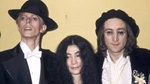
In the history of rock music, John Lennon and David Bowie are legends. These icons have left us with a lasting catalog of memorable songs and performances.
Born in 1947, Bowie experienced his first musical success with "Space Oddity" in 1969. From there, he was on a creative roll and his career and stardom were on the rise. In the 1970s, Bowie continued experimenting musically and with his on-stage style, creating Ziggy Stardust, as well the dystopian "Diamond Dogs" (per davidbowie.com).
Lennon, who was born in 1940, experienced a meteoric rise to fame with The Beatles' success in Britain and their U.S. debut in 1964. By 1969, however, he was done with the band. His started creating music as a solo artist in 1970. A year later, he released the iconic album "Imagine" (per Biography).
Source: Heather Baver/thelist.com
details