- Register
- Log in to Tune-In
- Wishlist (0)
-
Shopping cart
(0)
You have no items in your shopping cart.

Beatles News

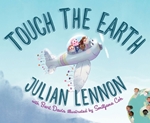
Julian Lennon is teaching children how to “Imagine” a better world — and build it themselves.
Like his rock-icon father John Lennon, the 54-year-old musician, photographer, film producer and activist is using his art as a rallying cry.
With a little help from his friends, New York Times bestselling author Bart Davis and Croatian illustrator Smiljana Coh, he’s written Touch the Earth, the first in a planned trilogy of illustrated books designed to educate children on the fragile beauty of the planet — and what they can do to protect it.
Out Tuesday (just ahead of Earth Day on April 22), a portion of the proceeds will go to support the efforts of Lennon’s White Feather Foundation, which fights for environmental and humanitarian causes across the globe.
Lennon spoke to PEOPLE about Touch the Earth, its message and its touching connection to his late father.
PEOPLE: What moved you to write the book series?
Julian: After having written songs about environmental and humanitarian issues, wo details
The storied “Beatles Ashram” awaits beyond a long and winding road across the Ganges River in Rishikesh, the Himalayan town where The Beatles lived in 1968 and composed their curious chapter of renunciation.
Nearly five decades later, the ashram is derelict yet still alive, a peaceful yet eerie abandoned ghost village that the Rajaji Tiger Reserve is now slowly consuming – like endless desires eating away humans and demigods of fame and fortune as The Beatles were circa 1967.
The iconic British band met Transcendental Meditation founder “Maharishi” Mahesh Yogi in London in 1967, and their India odyssey followed. And worldwide media attention followed them.
“I followed The Beatles to Rishikesh with my photographer colleague Raghu Rai,” Saeed Naqui reported in Indian newspaper The Statesman. “Almost every newspaper in the world had sent their senior reporters. Not to much avail, though. The ashram was out of bounds for the media.
” … We walked on ’til I spotted the Maharishi under a tree with The Beatles. I promptly sneaked Raghu Rai in and he took a shot with the aid of his zoom lens. The Statesman had its scoop.”
< details
This printed interview appeared on April 9th 1970 as a press release in advance promotional copies of Paul McCartney's first solo album entitled 'McCartney.'
There have long been misconceptions that Paul had written the questions himself. Paul told the Canadian magazine 'Musical Express' in 1982, "That's one thing that really got misunderstood. I had talked to Peter Brown from Apple and asked him what we were going to do about press on the album. I said, 'I really don't feel like doing it, to tell you the truth,' but he told me that we needed to have something. He said, 'I'll give you some questions and you just write out your answers. We'll put it out as a press release.' Well of course, the way it came out looked like it was specially engineered by me." This was also confirmed in Peter Brown's book 'The Love You Make.'
In the press release interview, Paul answers questions about the future of the Beatles, concerns about the Beatles' new management, as well as questions about the writing and recording of his first solo album.
Paul is asked if the release of the 'McCartney' LP is a rest away from the Beatles or the start of a solo career, to which details
Could this be the earliest recorded film footage of – a then 12-year-old – Paul McCartney?
Last month we asked whether the earliest piece of film showing future Beatles Paul, John Lennon and George Harrison, along with Paul’s brother, Mike McCartney, had been unearthed.
In that case, tiny figures in the distance were on screen for just a couple of seconds, but local historian and Fab Four fan Peter Hodgson, from Kirkby, was convinced the Liverpool City Police recruitment film from 1958 contained a world first.
Now Peter has scoured another You Tube film – Liverpool Trams: Green Goddesses Remembered, by Online Videos – and he said: “This is my finest find yet... absolute gold!
“It is circa 1955 and at one point a tram is seen heading down East Prescot Road, from Old Swan towards Page Moss, where Paul’s Aunty Jin and Uncle Harry lived.
“He is only on screen for a second but, comparing him with old pictures, I am 100% convinced that is Paul sitting at the window, at 29 miunutes and 25 seconds into the film. And is that his late mother, Mary, sitting behind him? It looks like her.”
Paul was born June 18, 1942, and so would ha details
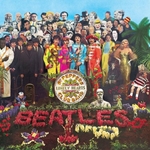
The most ambitious reissue yet of an individual album from the Beatles’ catalog is coming May 26 with an expanded and newly remixed edition of the Fab Four’s 1967 pop masterpiece, “Sgt. Pepper’s Lonely Hearts Club Band.”
Consistently ranked by critics and fans among the most influential rock albums of all time, “Sgt. Pepper” is being reissued in multiple formats and editions, including new stereo and surround-sound audio mixes along with nearly three dozen previously unreleased recordings from the same sessions.
“It’s crazy to think that 50 years later we are looking back on this project with such fondness and a little bit of amazement at how four guys, a great producer and his engineers could make such a lasting piece of art,” Paul McCartney writes in a new introduction for the anniversary edition of a project that started out as his baby.
In a 1970 interview with Rolling Stone, John Lennon said, “It was a peak. Paul and I were definitely working together.”
Ringo Starr, the quartet’s other surviving member, writes in his introductory remarks to the new edition that “‘Sgt. Pepper’ seemed to capture the details

Unlike his loquacious and chatty dad Paul, James McCartney is a man of few, but well-chosen words.
But get him one subject he is passionate about -- like animal rights and vegetarianism -- and he opens up a bit more.
"Hopefully animals won't be killed one day, preferably now as we live in the here and now, and they will be helped to live the lives they truly want to in their hearts," he said in a recent interview. "I know vegetarian/vegan/ayurvedic are the healthiest diets."
It's safe to say that McCartney will have plenty of vegetarian dining options when his tour hits Northampton at the Iron Horse Music Hall on April 7.
McCartney is touring in support of his latest record, "The Blackberry Train," on which he worked with legendary producer Steve Albini (of Nirvana and Pixies fame). The opening track, the jangling rocker, "Too Hard," also features George Harrison's son Dhani on guitar and vocals. McCartney indicated that he and Albini got right down to work when it came to making the record.
By: George Lenker
Source: Mass Live
details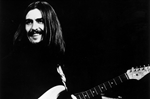
The Beatles' George Harrison, the "quiet one," was in truth a kaleidoscopic force of nature. His songs and musicianship -- both with the fab four and beyond -- have not just aged well, but have become straight-up classics enshrined in the firmament of the 20th century music canon.
Without "If I Needed Someone," "I Me Mine," "Something," "Taxman," "Here Comes the Sun," or "While My Guitar Gently Weeps," the four would have been unbearably less fabulous. The same goes for his myriad of envelope-exploding contributions, including his chiming 12-string Fireglo Rickenbacker used throughout Hard Day's Night, his #wtf time-warped backward guitar on "I'm Only Sleeping" and his tamboura from the astral plane on "Tomorrow Never Knows." Harrison's genius is best summed-up perhaps with yet another of his underrated brilliant album cuts: "It's All Too Much."
And it never stopped. Harrison's 1970 magnum opus/dam burst following the Beatles' dissolution, All Things Must Pass, is filled with sublime sounds. The raw harmonica-driven "Apple Scruffs" could have been a White Album classic, his prostration before the universe in "My Sweet Lord" somehow became a pop s details
The Beatles are reportedly readying a 50th anniversary release of their landmark album "Sgt. Pepper's Lonely Hearts Club Band."
While no official announcement has been made, the band's websitefeatures four color bars matching the "Sgt. Pepper" uniforms worn by the Fab Four on the cover of that album, which was released on June 1, 1967.
Britain's The Times, citing sources at The Beatles' Apple Records, said the re-release will include "Strawberry Fields Forever" and "Penny Lane" as bonus tracks. The songs were recorded during the same sessions as the songs on the "Sgt. Pepper" album, but were released four months earlier as a double A-sided single.
Decades later, producer George Martin said it was a mistake to have not included those two songs on the album.
Keith Allison, former bassist for Paul Revere & the Raiders bassist, noted on Facebook that he heard an advance copy of the remastered "Sgt. Pepper" album while visiting Beatle Ringo Starr a few month ago
By: Ray Kelly
Source: Mass Live
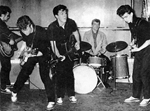
Paul McCartney took the term “solo album” to the next level on his first release following the dissolution of the Beatles in 1970. The multi-talented musician played every instrument on the appropriately titled McCartney, drawing on skills he’d honed through years serving as the group’s utility man — mastering guitar, bass, piano, and even drums. (That’s him, not Ringo Starr, behind the kit on "Back In The USSR,” “Dear Prudence” and "The Ballad of John and Yoko.”)
The one-man-band approach was temporarily retired after he formed Wings in 1971, but McCartney continued to play a variety of instruments throughout his career. On 1989’s Flowers In The Dirt, which just received a deluxe reissue treatment as part of the McCartney Archive Collection, he can be heard laying down the beat on the funky “Rough Ride.”
“I have a kit which is based on Ringo’s. I figure I can’t go far wrong with a kit like his,” McCartney, 74, tells PEOPLE. “So it’s lovely, I love it. I always like a chance to get on the kit. I’ve done it since the early days of the Beatles.”
It was a details

A popular school caretaker and lifelong Beatles fan has described his amazement after receiving a signed letter from Sir Paul McCartney to wish him well in his retirement.
Janitor Andy Cairns was presented with the note at a surprise special assembly on his last day at the Edinburgh school where he has worked for the last four years. Sir Paul sent the note - in which he urges the caretaker to "keep rockin'" - after all of the children at the city's St Cuthbert's RC Primary School wrote to the star.
Speaking after the presentation, Mr Cairns, who turned 65 this week, told Press Association Scotland: "I'm a big Beatles fan. The kids had sent letters to his office and he responded, which was amazing. "I'm just overwhelmed. I thought I was in a dream at first. Words can't describe it, I'm such a fan, it's just amazing." Mr Cairns is retiring after 50 years of work, primarily as a mechanic and more recently as janitor at the school.
The typed and hand-signed letter from the Beatles star reads: "The children of St Cuthbert's have sent me lots of letters to tell me how much they like you so I reckon you must be quite a good guy. "I want to wish you all the very best on your retirement and remember keep rockin'! details
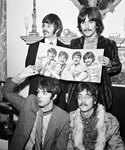
It's one thing for an album to come along and press itself so deeply into the culture that little feels the same after its arrival, but what are the chances that that same album would have the most iconic LP artwork of all time?
So it goes with the Beatles' Sgt. Pepper's Lonely Hearts Club Band and its wonderful swirl of visuals, ranging from that most distinguished assembly of personalities on its front cover courtesy of Pop artists Peter Blake and Jann Haworth, to some sleeve work by the Dutch design team the Fool, to Michael Cooper's photographs, to the grab-bag of cut-out treasures that accompanied the album. Art dealer Robert Fraser helmed the proceedings as art director, with the most legendary cover-art shoot in rock history transpiring 50th years ago on March 30th. The cover was lavishly pricey to produce, but it solidified the Beatles' mythic status for all time.
Here are 10 things you might not know about the iconic look of Sgt. Pepper.
1. Paul McCartney spearheaded the cover concept. … This was a period when McCartney was asserting himself more and more when it came to the Beatles' career decisions, a trend that would continue for the remainder of their time together. He produced ink dr details

"You say stop and I say go go go, oh no" — Paul McCartney and John Lennon.
On Wednesday, Paul McCartney responded to Sony/ATV's suggestion that he brought an "unripe" lawsuit seeking confirmation he'll reclaim rights to Beatles songs next year. In a letter to the judge, his lawyer Michael Jacobs writes, "Delay would not simplify the parties' dispute, but it would prejudice McCartney. As long as Sony/ATV refuses to disavow any right to sue for breach of contract, McCartney has a cloud over the title to his works, which devalues his rights."
In reaction to the lawsuit, Sony sent its own letter to the judge in anticipation of a conference that would lay out a forthcoming motion to dismiss.
Sony's lawyer wrote that the publisher had made no statement challenging the validity of McCartney's termination notices, that the Duran Duran case was still pending on appeal and that without an outcome, McCartney "impermissibly seeks an advisory opinion on a hypothetical claim."
On behalf of McCartney, Jacobs retorts, "By seeking to dismiss this lawsuit, Sony/ATV intends to leave McCartney in suspense. Is he exposed to claims for damages if he relies on his undisputed rights under U.S. copyright law or not details
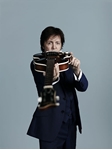
Get ready for some new music from Paul McCartney.
“I'm making a new album, which is great fun. I'm in the middle of that,” McCartney said during an interview with BBC Radio 6's Matt Everitt on Saturday (March 25).
The new set is being produced by Greg Kurstin. “I'm working with a producer who I first worked with two years ago on a thing, a piece of music I'm doing for an animated film,” McCartney said.
“And since then he went on to work with Beck and got best album of the year,” he continued. “Then he went on to work with Adele. He just got song of the year, record of the year with Adele. And just got producer of the year. So my only worry is people are going to go, 'Uhhhhh, there's Paul going with the flavor of the month.’ You know, I suppose you always think the worst of it. But he's a great guy. Greg is musical and he's great to work with.”
McCartney concluded the interview by talking about his upcoming tour plans in Japan. A representative for the artist would not comment when asked by Billboard if more tour dates would be announced soon.
By: Steve Mrinucci
Source: Billboard
It wasn’t easy being John Lennon’s friend, and Yoko didn’t make things any easier.
“If anyone was doing the hanging on, it was John. He hung on to me, always had done. He always made me feel special, made it clear he was desperate for my company, especially when he was depressed and fed up, which he was for many years. He used to say to me: ’I don’t want to be a Beatle any more, stuck in a bag marked Beatle. I want to open the bag and let the Beatles out. I want to be myself.’” – Pete Shotton (as told to Hunter Davies)
As anyone who’s ever tried it will tell you, it’s hard to be a friend. However close or long term a friendship, there are always moments when a friendship is tested by actions or circumstances that make or break the friendship. In many, if not most, cases friendships fail these tests. Those few that survive (one hesitates to use the word pass, as friendships are acts of endurance rather than one-off events like tests) can reach a level of intimacy and trust that provide the persons involved with comfort on the long, hard road of life.
But how does one stay that kind of friend when that friend becomes one of the most famous p details
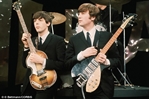
Sir Paul McCartney has revealed that he and John Lennon wrote their best tracks while sitting ‘opposite each other on twin beds’. The Beatles star recalled moments where the two of them would ‘spin off each other’ as they came up with new melodies.
Asked about his experience of writing music, the 74-year-old, who formed the Beatles in 1960 with Lennon, George Harrison and Ringo Starr, said: ‘There’s a million ways to write, but the way I always used to write was with John and it would be across from each other, either in a hotel bedroom on the twin beds, with an acoustic guitar and we’re just looking at each other.
‘He’d make up something, I’d make up something and we’d just spin off each other. ‘It’s always my big memory, is seeing John there, him being right-handed, me being left-handed, it felt to me like I was looking in a mirror.’
He said that the reason they worked so well together was because they had grown up together, and therefore had ‘developed a way of working’. Such was his fondness for that method that when it came to writing his final album of the 80s, Flowers In The Dirt, with Elvis details