- Register
- Log in to Tune-In
- Wishlist (0)
-
Shopping cart
(0)
You have no items in your shopping cart.

Beatles News
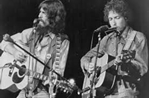
One of the more touching friendships to come out of the sixties was the mutual respect and appreciation the legend Bob Dylan held for the late, great Beatles guitarist George Harrison. Here, we’re looking back at a special duet of the Dylan tune ‘If Not For You’ that the pair shared during the rehearsals for ‘The Concert For Bangladesh’.
The track featured on Dylan’s then-current record New Morning as well as Harrison’s solo debut following The Beatles’ split; All Things Must Pass and finds a happy home in this footage.
The two friends stand side by side and perform the song as a duet as a warm-up for their impending live show at Madison Square Gardens on August 1st, 1971. The show would turn out to be a lasting moment in Harrison’s illustrious legacy as the former Beatles organised a benefit gig for the people of Bangladesh following years of turmoil, war, and famine.
Source: FarOut Magazine
details
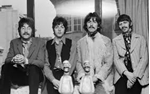
The Beatles’ ‘A Day In The Life’ is not just the mercurial ending to one of the greatest records ever in Sgt. Pepper’s Lonely Hearts Club Band, but is also a composite of true stories married, mixed and matched into one of the band’s best songs.
The song’s first verse is possibly one of the most engaging in music history. Written by John Lennon, the first line of the song refers to the loss of one of both Paul McCartney and Lennon’s friends—Tara Browne. In this first verse, Lennon sets out the tone of the entire song; we are all viewing this and many other tragedies together, as one audience.
On this day in 1966, Browne, the heir to the Guinness fortune, was in a fatal car crash. The 21-year-old was a friend of the band’s and his death would’ve clearly rocked Lennon and Co. to their core. A month later, and just a few days before The Beatles would go into the studio to lay down ‘A Day In The Life’, there was an article in the paper surrounding the custody battle for Browne’s two children.
Source: Jack Whatley/faroutmagazine.co.uk
Who can argue with Ken Womack? Certainly, nobody who heard him speak earlier this month at the Morristown & Township Library, or who has read his new book, Solid State, The Story of Abbey Road and the End of The Beatles — a shiny stocking-stuffer for the Beatlemaniac on your Christmas list.
EMI TG12345 Mk1 was the first solid-state, eight-track recording machine used at the Abbey Road studio in London where the Fab Four recorded most of their hits.
With twice the tracks of their previous tube-driven gear, the TG console enabled the Beatles to expand their musical palette for Abbey Road. Although hailed by many fans as the crowning achievement of a seminal band at its creative peak, the Beatles’ final album confounded some critics who had trouble embracing its distinctly clearer, warmer sonic quality.
The warm sound is all the more remarkable considering the deepening chill within the group in 1969.
Somehow, Womack writes, the now-jaded lads from Liverpool managed to Come Together one last time.
Source: Kevin Coughlin/morristowngreen.com
Iconic co-founder of the Beatles, Paul McCartney was the recent subject of conversation during the most recent episode of the Pink Floyd podcast entitled, ‘The Lost Art of Conversation: A Pink Floyd Podcast.’ Here, one certain Pink Floyd art worker who worked besides Storm Thorgerson discusses how Sir Paul was not too fond of his partner, who, according to fellow Pink Floyd legend David Gilmour some felt was ‘Tyrant-like’. Alternative Nation transcribed his comments.
Uncredited Pink Floyd Art Worker: Storm and I had a very volatile relationship and Storm could be volatile as well as volatile with clients. I mean, Storm stood his ground over imagery and pictures that he believed in and I can remember many a fight with people like Peter Gabriel and with David [Gilmour], Roger [Waters] and some people did not like to work in particular. [For example] Paul McCartney was never too keen on Storm, he liked me but he didn’t like Storm because he could be confrontational but the joy of that was he believed in the process. Storm believed in the end result and to him, the idea was everything. This Paul McCartney disturbing teen drug claim was revealed.
Source: Mike Mazzarone/alternativenation. details
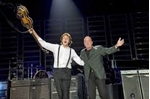
Even famous people have their musical idols. John Lennon with Chuck Berry, Celine Dion with Barbra Streisand. And Billy Joel with The Beatles. Although the 70-year-old Joel is friendly with Paul McCartney and Ringo Starr, he knows he’s in the presence of rock royalty when he’s around them.Here’s the pretty funny, and completely relatable, story of the day these two music legends visited together.
Joel has had an ongoing residency at the historic venue in New York City; in fact, his is the first musical residency at the arena.
The Madison Square Garden Company announced recently that Joel will be continuing his incredible monthly residency in April of 2020 with a 75th consecutive show.
I’m having a lot of fun,” Joel told Pollstar in 2018. “People show up, we throw ‘em on the stage. We change up the setlist, dive into the obscurities. We do covers, we do silly stuff. We try to be as spontaneous as possible. If I start to get an idea for a song that I want to do at the moment, not even my song, we just go ahead and do it.”
Source: cheatsheet.com
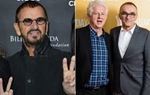
Ringo Starr has given the thumbs up to Yesterday, the recent Beatles movie directed by Danny Boyle and Richard Curtis.
Speaking from the red carpet of the Global Citizen Awards at the Royal Albert Hall, Ringo appeared to not remember about the film, but gave his seal of approval after being reminded by his Bond actress wife Barbara Bach.
“Oh yeah – I loved it,” Ringo explained.
“I mean, what a great concept. You know?” he added.
Yesterday movie: director Danny Boyle and star Himesh Patel on a world without The Beatles
Volume 90%
The movie, which hit cinemas in June, follows the story of a fledgling musician whose life takes a dramatic turn when he realises he’s one of only a handful of people left in the world that remembers The Beatles songs.
Actor Himesh Patel plays Jack Malik, a wannabe musician who makes a name for himself by fraudulently claiming The Beatles songs are his own creations.
Source: Adam Bloodworth/nme.com
details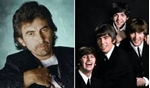
They were the original boyband, but The Beatles were not allowed to be men, revealed George Harrison to Billy Connolly before he died in 2001. The 77-year-old comedian reminisced of his friendship with The Beatles on The Adam Buxton Podcast last week, sharing an amusing case of mistaken identity when Harrison was thought to be a retired Manchester United footballer.
Connolly said he never met John Lennon, but admitted: “I’m friendly with all the other Beatles.
“I like George Harrison. He’s not my favourite, none of them is my favourite. I treasure my friendship with them.
“George was a lovely man. I spent a lot of time with him. A lot more than the other ones.
“I remember we went for Chinese food in the East End of London and a waiter came out and served us.”
Source: George Simpson/express.co.uk
details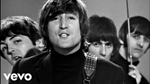
More than fifty years after The Beatles broke out into still unparalleled success, we look at five key songwriting techniques imparted onto us by the fab four.
The Beatles showed the world that you could write and perform your own songs. Fifty-six years after “Love Me Do” was released, there is still so much to learn from The Beatles and their innate sense of songcraft, which is both timeless and arguably unrivaled, even to this day.
So here is our list of five things The Beatles taught us about songwriting, in reverse order of randomness.
Source: Owen Davie/hypebot.com
details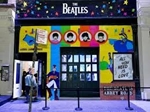
Fifty-five years after their legendary performance at the Ed Sullivan Theater, The Beatles have come back to New York as a holiday pop-up.
Running from Dec. 11 to 22 in the SoHo district of Manhattan, the store features “the first wave of products” since Sony Music took over the licensing rights for Beatles merchandise in North America.
The mix ranges from holiday sweaters, hats and scarves to albums, books, tree ornaments, coffee mugs, branded toys, a turntable and a pinball machine. Items include an Abbey Road 50th Anniversary long sleeve tee, Help! striped pom beanies and I Feel Fine totes.
Source: Tom Ryan/retailwire.com
details
After months of rumours and speculation from fans, Taylor Swift has been confirmed as the second headliner for Glastonbury 2020.
The US superstar, who celebrated her 30th birthday this week, shared the news on Twitter on Sunday evening.
Swift shared a picture of herself holding a poster for the event, which included a nod to her recently-released festive track, with the line: "From Christmas Tree Farm to Worthy Farm."
Next to it, she wrote: "I’m ecstatic to tell you that I’ll be headlining Glastonbury on its 50th anniversary - See you there!"
The Lover singer had long been rumoured to be performing, after fans spotted a gap in her 2020 tour plans.
She's now the second headliner confirmed for the event, following Paul McCartney's announcement that he will close the Pyramid Stage on the Saturday night of the annual event.
Source: Rachel McGrath/standard.co.uk
details
Ringo Starr has never been shy about naming favorite songs from his time with The Beatles. When interviewers ask him about the dark days of The White Album, Ringo brings up the good memories, including the boys bashing their way through “Yer Blues” in a tiny Abbey Road studio.
If you ask Ringo about the favorite song as far as his own drumming goes, he’s also got an answer. That would be “Rain,” the rocking Revolver-era B-side to “Paperback Writer.” “I feel as though that was someone else playing,” Ringo once said about his drum part. “I was possessed!”
But that was the Beatles era. Once it ended and Ringo found himself as one of four solo musicians with the “former Beatle” label, things were different. At that point, he had to construct a live set using his own material.
Source: cheatsheet.com
details
35 years ago, one of the founders of heavy metal, Deep Purple were joined on stage by their longtime friend and Beatles guitarist George Harrison to deliver a stunning jam in Sydney, Australia.
The connection between George Harrison and Deep Purple’s drummer Ian Paice, who were also one time neighbours, and the band’s late keyboardist Jon Lord clearly runs very deep. One moment you can see this strong bond is in this footage which sees Harrison join the band for a special performance.
Harrison had been on holiday in Australia when Paice and Lord got in contact with The Beatles man to invite him to perform in Sydney. One fun moment in the performance is how Harrison was introduced, the band reference Harrison’s childhood address by welcoming “Arnold Grove from Liverpool”.
With Harrison on board, there was only one more thing left to bring, the rock and roll. So Deep Purple, accompanied by George Harrison, run through an extended jam session on Little Richard’s iconic bop, ‘Lucille’.
Source: Jack Whatley/faroutmagazine.co.uk
details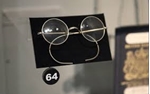
Glasses from the estate of John Lennon are pictured during a press conference on Nov. 21, 2017 in Berlin. German police on Nov. 20, 2017 had arrested a 58-year-old man in Berlin on suspicion of handling the stolen items, including the late Beatle's diaries. The items were stolen from Lennon's widow Yoko Ono in New York in 2006. (dpa / AFP /Maurizio Gambarini)
A pair of John Lennon's sunglasses The Beatles legend once left behind in the back seat of a car sold Friday for nearly $200,000 at an auction in London.
Billed as one of the most famous specs in rock-and-roll, the round, green-tinted lenses and their golden frame belonged to Alan Herring, the chauffeur for the Liverpool quartet's drummer Ringo Starr and band mate George Harrison.
Source: The Jakarta Post/thejakartapost.com
details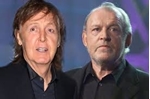
Over the years, there have been some dynamite covers of Beatles songs, and they started coming soon after the Fab Four released their versions. That certainly applied to “Something.” When Ray Charles and James Brown recorded the great love song, George Harrison was thrilled.
The same went for Stevie Wonder’s 1970 rendition of “We Can Work It Out.” Wonder’s cover stands above most versions of the Lennon-McCartney original. (Some would even argue it surpasses the Beatles’ own.) But Wonder wasn’t the only one leaving a unique mark on Fab Four tracks.
When Joe Cocker released “With a Little Help From My Friends” in 1968, it sounded miles from the Sgt. Pepper version Ringo Starr sang the previous year. To Paul McCartney, it was more than just a great cover. Paul called Cocker’s rendition “mind-blowing.”
Source: cheatsheet.com
details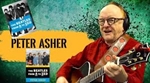
About five years ago I told a friend I was thinking about writing a book. He said, "About the Beatles?" I replied sarcastically, "Yeah, because that's what the world needs. Another book about The Beatles."
It's impossible to pinpoint a number, but there are thousands, maybe in the tens of thousands, of books written on The Beatles. I found an author, Mark Lewisohn, who has written more than twenty by himself. So, yeah, the world really didn't need another book about the Fab Four.
But yet, when I found out that Peter Asher was writing a Beatles book, I could help but to be excited. Here's a guy who is a musical legend in his own right. He was the first name in the duo "Peter & Gordon." He's been a long time record producer and manager; working with illustrious names like Linda Ronstadt, James Taylor and Cher. In fact, he was the one who brought Taylor to the attention of The Beatles and had him signed to his first record deal with Apple.
Source: Howard Moore/chicagonow.com
details