- Register
- Log in to Tune-In
- Wishlist (0)
-
Shopping cart
(0)
You have no items in your shopping cart.

Beatles News
The Beatles recorded hundreds of songs throughout their careers. Many of them made it onto their albums, but a collection of them failed to get appearances in records or single releases. So then, it is surprising to hear that the band’s drummer, Ringo Starr, favours one song over the rest, and it was a B-side of a single.
Shortly into the band’s career they released Paperback Writer - one of their best-known songs.
The single was released in 1966, but was not featured on any of the Fab Four’s studio albums.
While the track itself was a runaway hit, hitting number one in the UK charts instantly, it is the other side of the disc that Ringo remembers fondly.
Rain appears on the B-side of Paperback Writer, and was also recorded during the recording sessions for the band’s seventh album Revolver.
Source: Callum Crumlish/express.co.uk
details
The Beatles came to an end in 1970 after a collection of disagreements, and a slow degradation of relationships between the four members. John Lennon, George Harrison, Paul McCartney, and Ringo Starr were the most popular people on the planet, but they simply couldn’t work together any more after ten years of hard recording, performing, and touring.
The 1960s were a different time for the band, however. Despite becoming icons later in the decade, they began with nothing to their names, and no notoriety.
A recent interview with former Fab Four pal and artist Klaus Voorman told of the band’s squalor in the earlier days.
Voorman first explained to The Guardian that he met the band in Hamburg, Germany, in 1960.
After storming out of the home of his girlfriend at the time - The Beatles' photographer Astrid Kirchherr - he came across a club that the Fab Four were playing at.
Source: Callum Crumlish/express.co.uk
details
Like most classic-rock era bands, their biggest hits tend to get played into rote memory, while adjacent album cuts may languish in relative obscurity. In cases like 1968's The Beatles, they released so many songs in a rush that the project can become overwhelming. With others, including 1970's Let It Be, chart-topping hits tend to suck up all the oxygen.
That said, in still other cases, the most overlooked song from each album can be pretty well known. That's a function of the Beatles' place in rock history, as this music has sparked some of rock criticism's most probing explorations. (In fact, one of these tracks sparked a comparison in London's largest newspaper to the early modernist composer Gustav Mahler.)
John Lennon's role as the group's early principal songwriter meant he inevitably dominated this list – though key tracks from Paul McCartney and George Harrison find a home, too. Together, they created a discography that yielded 20 No. 1 Billboard smashes, 34 other Top 10 finishers, and a few notably underrated moments along the way. Keep scrolling for a look back at the most overlooked song from every Beatles album.
Source: ultimateclassicrock.com

In September 1969, the bass player and artist Klaus Voormann, who had recently left Manfred Mann, received a phone call from John Lennon. There was nothing unusual in that. Voormann had known the Beatles for nine years and was part of the band’s tight inner circle. It was Voormann’s own band, Paddy, Klaus and Gibson, that Lennon and George Harrison had attempted to go and see live on the night they were famously dosed with LSD at a dinner party. Ringo Starr was already at the gig and was noisily confronted by his lysergically altered bandmates claiming that the venue’s lift was on fire. A year later, he had designed the Grammy award-winning cover of Revolver.
The issue was more what Lennon wanted him to do. Lennon had whimsically agreed to perform live at a rock’n’roll revival festival in Toronto at two days’ notice and was trying to cobble together backing musicians to play as the Plastic Ono Band. Eric Clapton had agreed to play guitar, but Voormann took more convincing, on the not-unreasonable grounds that headlining a festival with a new band who hadn’t rehearsed didn’t seem like one of Lennon’s more inspired ideas.
Source: Alexis Petridis/theguardian.com details
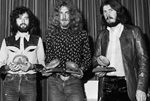
When rock fans start debating who was the best band, it won’t be long before The Beatles and Led Zeppelin enter the picture. Given the runaway success of both bands in their respective decades, that won’t come as a surprise to many.
It did come as a surprise, however, when Led Zeppelin topped The Beatles in a 1970 Melody Maker poll. Prior to that, the Fab Four had been on an eight-year run as Britain’s favorite band. But the Zep changed that around the time Led Zeppelin II bumped Abbey Road from atop the charts. Suddenly, Zep heads outnumbered Fab fans.
Maybe the Beatles’ recent breakup had something to do with that. However, on the day Led Zeppelin received their Melody Maker awards, drummer John Bonham spoke about the differences between his band and groups like The Beatles. For Bonham, one big thing was how people approached the two bands’ music.
Source: cheatsheet.com
details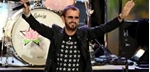
Beatles drummer Ringo Starr has jokingly thrown his hat in the presidential ring with a cheeky election IG post. He claimed “I love America” to the delight of his 932,000 followers, who have hit the like button over 94,000 times thus far.
The beloved musician added a graphic of himself winning the 2020 presidential race via a tongue-in-cheek share where he was claimed victory by an overwhelming margin across the United States. He also shared a favorite sentiment that Beatles fans know and love in the caption as well and followed that up with myriad emoji. These included a smiley face with hearts for eyes, a red heart, a face with sunglasses, fingers making a peace sign, starburst, and a purple square with a white peace sign atop it.
Ringo’s map of the United States was completely colored in purple, which was the color assigned to him on the key code at the bottom of the graphic. Joe Biden’s color was dark blue and current President Donald Trump was red.
The map showed Ringo winning the campaign by a majority vote of 100 percent.
Source: Lucille Barilla/inquisitr.com
details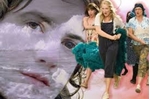
In 2007, Columbia Pictures released the psychedelic Across the Universe, using 33 songs by The Beatles to form a story of young bohemians living in New York during the Vietnam War era.
Liverpool dockworker Jude (Jim Sturgess) heads to the US in search of his American father, where he becomes friends with Princeton dropout Max (Joe Anderson) and Max’s sister, Lucy (Evan Rachel Wood).
Max and Jude move to New York, sharing a flat with Prudence (T.V. Carpio), a lesbian runaway from Ohio; Sadie (Dana Fuchs), a Janis Joplin-like soul singer; and the Jimi Hendrix-like Jo-Jo (Martin Luther McCoy), who is fleeing the race riots in Detroit. When Lucy’s boyfriend is killed in Vietnam, she also moves to New York, where she and Jude fall in love.
The film is in a near-constant state of song — there are only 30 minutes of spoken dialogue – ending with the cast uniting in a rooftop performance of “All You Need is Love”. This mirrors The Beatles’ own final performance on the rooftop of the Apple Corps building in London in 1969.
Source: Phoebe Macrossan/theconversation.com
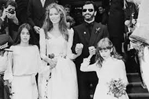
Sir Ringo Starr has been married to Barbara Bach for some time, but they have no children together. Sir Ringo already had three children with his first wife, Maureen, and met Barbara some time after their divorce. So how did Barbara meet Sir Ringo, and where were they?
Sir Ringo Starr met Barbara Bach, his future wife, on the set of the film Caveman in 1980.
The film starred Sir Ringo and Barbara, alongside Dennis Quaid and Shelley Long.
Caveman was not received well by critics, with Roger Ebert saying: “It has a basic problem, which is that there is no popular original material for it to satirize.”
Ringo and Barbara married at Marylebone Town Hall on April 27, 1981, and have been together ever since.
Source: Jenny Desborough/express.co.uk
details
Klaus Voormann remembers taking the stage with John Lennon and Yoko Ono's conceptual Plastic Ono Band for their first gig at the Toronto Rock 'n' Roll Revival festival in September 1969. When Ono, wrapped in a bed sheet, let out one of her signature, guttural wails, the once-enthusiastic crowd was confounded.
"Standing on stage, you could see the way the people react, whispering to each other. Not disinterested but just, 'Christ, what's happening up there?'" the 82-year-old recalls.
"[Ono] was wanting the people to know there were people dying [in Vietnam]. She had us imagine tanks are coming, bombs are coming, dead people on the road. When you're standing behind her, you realise what she's trying to do. But it was too strong for the crowd. They came to see John Lennon the ex-Beatle, you know? They didn't want to think about death and war.
Source: Robert Moran/smh.com.au
details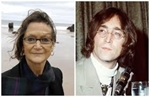
Few people will ever know what it’s like to have a sibling forever remembered and discussed the world over, but that is the reality for Julia Baird, who has now lived the greater portion of her life deprived of John’s physical presence, yet surrounded by his imperishable legacy.
At the end of the 1970s, the inimitable icon John Winston Ono Lennon, who would have turned 80 last month, was longing for his family and reflecting on boyhood summers spent in Scotland.
Had his life not been cut tragically short in New York City 40 years ago this December, the former Beatle would have returned. An audio recording, made shortly before his death, confirms his intention to take second son Sean to Edinburgh in 1981.
For John’s eldest sister, Julia, the knowledge that her big brother, who she hadn’t seen in over a decade, had been planning to come home was excruciating.
Source: scotsman.com
details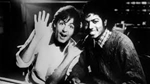
Michael Jackson worked with Sir Paul McCartney many times in his early career, even performing a duet. He also did an iconic radio interview with George Harrison, showing how these two were also very close. MJ was such a fan of The Beatles he even purchased a huge amount of the Lennon-McCartney back catalogue - but does he still own them?
Does Michael Jackson still own the rights to songs by The Beatles?
Michael Jackson purchased the publishing copyrights to songs written by Lennon-McCartney and some early songs by George Harrison.
This was something which, according to one biography of the Thriller singer, Michael had joked about with Sir Paul McCartney at dinner.
However, things became real when the catalogue of songs from ATV Music became available to purchase, and both Sir Paul and Yoko Ono, John Lennon’s widow, decided against purchasing them.
Source: Jenny Desborough/express.co.uk
details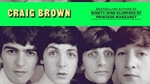
"They ARE awful. But I also think they're fabulous. Let's just go and say hello."
What if young record store manager Brian Epstein had not, in 1961, after a scrappy gig in a "sweaty basement," popped over to say hello to the band? What if, as Craig Brown wonders in "150 Glimpses of the Beatles," Paul had done better in his exams, moved up a school year and never gotten to know George? Or Ringo had had more patience with U.S. immigration forms and succeeded in moving to Houston? Or the engine fire on a 1965 flight from Minneapolis to Portland had ended in catastrophe, cutting the band off in their prime? We are haunted by the shadows of what didn't happen. "Think what we would have missed if we had never heard the Beatles," the Queen once mused. As the world marks 40 years since the murder of John Lennon - gone, now, for as long as we had him - shimmering alternative histories are especially poignant. A feeling of loss is palpable.
Source: Craig Brown/theday.com
details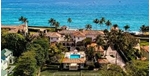
An oceanfront Palm Seashore property as soon as owned by the late John Lennon and his spouse Yoko Ono has bought for round $36 million, in keeping with an individual with information of the deal.
Named El Solano, the property listed six months in the past for $47.5 million. Positioned on South Ocean Boulevard, popularly known as Billioniare’s Row, the home is subsequent door to a property owned by creator James Patterson, information present.
Mr. Lennon and Ms. Ono purchased the property round 1980, in keeping with the e book “Nowhere Man: The Remaining Days of John Lennon,” by Robert Rosen. Mr. Lennon was shot to demise a number of months later, and the couple’s plans to renovate the property by no means got here to fruition. Ms. Ono bought the property in 1986.
The sellers had been John and Cindy Websites. Mr. Websites, previously an government at Bear Stearns, is a accomplice at funding agency Wexford Capital. Ms. Websites based Go Determine, a series of barre-centered health studios. They purchased the home for $23 million in 2016, information present.
Source: apkmetro.com
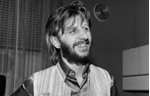
Ringo Starr put together an impressive solo career after The Beatles,. Following the official breakup of the band in 1970, Ringo got started with the humble Beaucoups of Blues album. The following year, Ringo began his run of hit singles.
Ringo kicked off that streak with “It Don’t Come Easy,” a track his old friend George Harrison produced. With Harrison writing and arranging and Ringo on vocals, the song charmed audiences and cracked the top five in the U.K. and America.
Suddenly, Ringo was a viable solo artist. Since he never was a prolific songwriter, Ringo considered just releasing singles for a time. But if he wanted to do that he needed a follow-up to “It Don’t Come Easy.” When the idea for his next single came to him in his sleep, he got to work with a recycled drum part from a Beatles classic.
Source: cheatsheet.com
details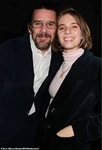
Maya Hawke scored her biggest role to date with the news on Friday that she'll be starring in the upcoming comedy film Revolver.
The 22-year-old actress will play the lead role in the film about a surprise meeting with The Beatles in Alaska in the mid-1960s, Variety reported.
Joining the Stranger Things star as her on-screen dad will be her real-life father Ethan Hawke, 49.
The northern city is thrown into chaos after a flight carrying The Beatles to Japan makes an unannounced stop in Anchorage, sending the residents into fits of Beatlemania.
Jane thinks her ticket to adulthood involves losing her virginity to George Harrison during the band's pit stop at a local hotel, but she learns that what she's really seeking is right in front of her.
Not much is known about Ethan's arc in the film, but he's more than qualified to play Jane's father.
Source: Brian Marks/dailymail.co.uk
details