- Register
- Log in to Tune-In
- Wishlist (0)
-
Shopping cart
(0)
You have no items in your shopping cart.

Beatles News
The Beatles' '90s-era Anthology sessions weren't the first time they recorded without John Lennon. More like the 20th. In fact, over the years, Lennon increasingly drifted in and out of songs being created by the others.
For instance, he regularly vanished whenever George Harrison dabbled in Indian music, with the notable exception of "The Inner Light," the B-side to 1968's "Lady Madonna." He skipped sessions where Ringo Starr took the lead, including "Don't Pass Me By" and "Good Night," both from 1968's The Beatles. The same guy who openly complained about Paul McCartney's "granny-music shit" was also predictably absent for "Maxwell's Silver Hammer."
Source: ultimateclassicrock.com
details
An unheard track by Beatles stars Paul McCartney and Ringo Starr called Angel In Disguise is set to raise £20k at auction
The song called Angel In Disguise is one of only two tracks co-written exclusively by the remaining members of the Fab Four almost 30 years ago
The pair recorded the demo for Sir Ringo's 1992 solo album Time Takes Time, but it did not make the final cut for the LP
A quarter of the money raised will be donated to the NHS amid the coronavirus pandemic
Sadly, Paul and Ringo are the only two surviving members of The Beatles
John Lennon died in 1980 after he was shot by a mentally-disturbed fan and George Harrison died of lung cancer in November 2001
Source: Rebecca Davison/dailymail.co.uk
details
Lennon asked for Daimler's premium luxury motorcar, one of stature, and grace. The Mercedes-Benz 600 Pullman was the reply.
There are few names in world history that spark emotions of love, peace, and anger all at the same time, you could say John F. Kennedy or even Elvis Presley fits the description of that statement, but none had so much personal impact as the man they call John Lennon.
For those who just landed on planet Earth, he was a part of the most famous and impactful band in human history, The Beatles. But he was more than that, he was a symbol of peace, love, and progressivism which has only grown stronger in past years. John Lennon and Paul McCartney (his fellow Beatle) are regarded as the sole pinnacle of impactful and transcendent songwriting and have provided level after level of meaningful lyric and sound.
Source: Max Larsen/hotcars.com
details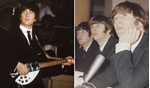
John Lennon wrote some incredible songs during his time in The Beatles and in his partnership with Paul McCartney. But do you know the one track he only came up with once he gave up trying to think of a song to write? It turns out that was Nowhere Man from 1965 album Rubber Soul.
Lennon told Playboy in 1980 how he had been trying to pen a new song for the album for hours.
He said: “I’d spent five hours that morning trying to write a song that was meaningful and good, and I finally gave up and lay down.
“Then Nowhere Man came, words and music, the whole damn thing as I lay down.”
While 1960s Beatles biographer Hunter Davies quoted Lennon on his breakthrough.
Source: usadailyexpress -
details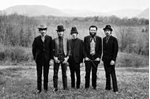
It is hard to make a movie about The Band without mentioning Martin Scorsese’s film, “The Last Waltz,” which captured the group’s final concert at San Francisco’s Winterland Ballroom in 1976. Scenes from that documentary and an interview with Scorsese are part of “Once Were Brothers: Robbie Robertson and The Band.” There also are interviews with several people who appear in both films, including Bob Dylan, Eric Clapton and Van Morrison.
Hit songs such as “The Weight,” “Up on Cripple Creek” and “The Night They Drove Old Dixie Down” guarantee The Band’s place in rock and roll history. Among the musicians testifying to the group’s impact in the film are Bruce Springsteen and George Harrison, as well as record executive David Geffen. The group’s core members played together for roughly 16 years (though Levon Helm departed for a few years), including stints backing Ronnie Hawkins and Bob Dylan.
Source: nola.com
details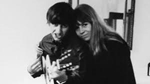
Earlier this month, the world lost Astrid Kirchherr, the German photographer and artist who helped put the Beatles on the map in the early 1960s with her distinctive black-and-white photographs. According to Beatles historian and biographer Mark Lewisohn, Kirchher, a protégée of the great photographer Reinhart Wolf, took “the definitive image of the group before they attained fame” when she lensed the Beatles—who at the time were made up of John Lennon, Paul McCartney, George Harrison, Pete Best, and Stuart Sutcliffe—at a fairground in Hamburg, Germany, in 1960. But while Kirchherr is best known for immortalizing the the Fab Four, she also had a hand in cultivating their iconic image—their famous mop tops in particular.
“All my friends in art school used to run around with this sort of, what [you’d now] call Beatles haircut,” Kirchherr told the BBC in 1995. “And my [first] boyfriend, Klaus Voormann, had this hairstyle, and Stuart liked it very, very much. He was the first one who really got the nerve to get the Brylcreem out of his hair and [ask] me to cut his hair for him.”
Source yahoo.com/
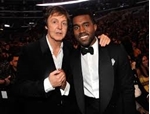
When Paul McCartney and Kanye West first collaborated together on the rapper’s 2014 song, “Only One,” the two instantly clicked. Not only did they bond over their mutual love for music, but things between the artists got quite personal when they connected over the losses of their mothers.
It might not seem like it, but West and McCartney have a lot more in common than anyone would have expected.
Not only are they both the most notable musicians in the music industry, McCartney and West know the unique grief of losing their mothers, which is something they bonded over while collaborating on Kanye’s single “Only One,” in 2014.
West lost his mother in 2007 after she suffered complications following a plastic surgery procedure. McCartney’s mother, Mary, passed away from an embolism following tumor-removal surgery when the singer was in his teens.
Source: cheatsheet.com
details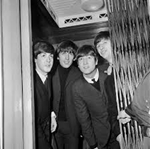
The Beatles’ music has been influential because the early days of the band. The Fab Four’s catalog had a renewed prominence within the 1990s. Part of that was because of the launch of the Beatles Anthology. Another cause for his or her renaissance was a brand new technology of rock bands who took affect from the Beatles.
This technology included beloved bands like Nirvana, Pearl Jam, and Marilyn Manson. R.E.M. was one of many extra outstanding bands of that period. However, the Fab Four didn’t imply an excessive amount of to them. In reality, the band’s frontman, Michael Stipe, infamously known as the Beatles’ work “elevator music.”
Source: Jeremy Spirogis/sahiwal.tv
details
When you watch the epic Beatles race, you might point to “Nowhere Man” like a line in the sand. Although John Lennon shouted in despair (“Help!”) On a previous track, the assumption was that he needed the help of a significant other (that is, a woman).
This was not the case for “Nowhere Man”, who arrived on Rubber Soul, the 1965 record, George Harrison called the “first full-fledged album of the group”. On this track, John sang about a character who is “as blind as possible” and who can’t even get a point of view.
Indeed, he could not have walked further after works like “A Hard Day’s Night” and “If I Fell”, which John had written the previous year. And, when John talked about composing “Nowhere Man,” he emphasized how different the songwriting experience was for him.
Source: fr24news.com
details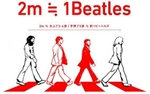
A Japanese design office has produced a series of humorous infographics to promote social distancing, including one referencing the iconic cover of The Beatles' "Abbey Road" album, with the slogan, "Let's stay one Beatles apart."
The images, also including two kneeling samurais facing each other across a tatami mat, which measures about 2 meters, have been widely shared on social media around the world.
"Using creative designs, we have been able to widely disseminate information that can protect human lives" amid the coronavirus pandemic, said Eisuke Tachikawa, president of Nosigner, based in Yokohama, near Tokyo.
"It's truly the happiest thing for those who made" the images, he said.
Nosigner manages a website called Pandaid to disseminate useful information to cope with COVID-19 through infographics and other content.
Source: KYODO NEWS/english.kyodonews.net
details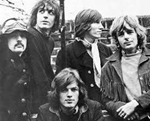
Pink Floyd’s 1973 album Dark Side Of The Moon was a seminal moment in music that would go on to influence countless other artists who, like most at the time of release, were taken aback by the record’s groundbreaking new sound.
The band had a pioneering attitude throughout the process of creating the record and, at one point, even asked Paul McCartney to be interviewed as part of an ambitious contribution. Pink Floyd, at the time of forming their psychedelic sonic creation, were planning to sample Macca on the record. However, despite Beatle founder obliging, they would leave his contribution off the record.
The collaboration came about after McCartney was openly a fan of Pink Floyd’s work and the thriving psychedelic scene which they had played a huge part in curating in London in the late 1960s. Floyd decided to carry out a series of interviews for their record from which they would famously use sporadically on the new material and, a moment’s contemplation, thought the former Beatle would be a perfect fit.
Source: FarOut
details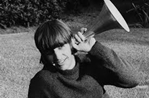
You have to look hard to find a gentler soul than Ringo Starr. The Beatles drummer has been keeping moods light and putting smiles on people’s faces for some six decades in the public eye. And he doesn’t seem ready to stop anytime soon.
When you read about the Fab Four’s darkest days (roughly 1968-69), you can’t help but marvel how Ringo mostly kept his cool as his bandmates had their regular eruptions. (During that stretch, Ringo wrote “Octopus’s Garden” and crooned the impossibly sweet “Good Night.”)
From the very beginning, Ringo became famous for his malapropisms and goofy asides that kept his bandmates laughing. And though the Fab Four rejected Ringo’s title for Revolver (he pitched After Geometry), John Lennon did use Ringo-isms for two classic songs he wrote.
Source: cheatsheet.com
details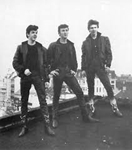
The German photographer shot some of the earliest pictures of the Beatles and helped shape their iconic visual style. Tributes poured in following her death, with Ringo Starr calling her "a beautiful human being."
Astrid Kirchherr, a German photographer famous for her early images of the Beatles in the 1960s, has died at the age of 81.
She died on Tuesday in her hometown of Hamburg just days before her 82nd birthday, her friend and fellow photographer Kai-Uwe Franz said on Friday.
German newspaper Die Zeit reported that she passed away following a "short, serious illness."
Kirchherr took some of the earliest pictures of the band during their time in Hamburg. In addition to her striking images, she's also credited with influencing the style of band's clothes and their infamous mop-top hairdos.
Source: Deutsche Welle (www.dw.com)
details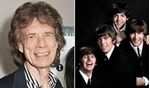
The Beatles and The Rolling Stones are two of the biggest bands to come out of the UK. And it was Mick Jagger who inducted the Fab Four into the Rock and Roll Hall of Fame back in 1988. During his speech, the singer revealed which Beatles song made him sick with jealousy.
During his induction speech, Jagger said: “At that point, the Stones were playing at these little clubs in London.
“[We were] doing Chuck Berry songs and blues and things.
“And we [were] a pretty scruffy lot and we thought that we were totally unique animals.
“I mean there was no one like us.”
The Rolling Stones frontman continued: “And then we heard there was a group from Liverpool.
“This group, they had long hair, scruffy clothes but they had a record contract.
“And they had a record in the charts, with a bluesy harmonica on it, called Love Me Do.
“When I heard the combination of all these things, I was almost sick.”
Source: George Simpson/express.co.uk
details
“The Girl Can’t Help It” is a 1956 film by Frank Tashlin about a young woman, played by Jayne Mansfield, who dreams of being a star vocalist. Some consider it the first rock ‘n’ roll music video ever made; built into the story line were full versions of song performances by Eddie Cochran and Gene Vincent. But Little Richard’s music was the star of the show – so much so that his song “The Girl Can’t Help It” became the movie’s title.
At a small Liverpool movie theater, a 14-year-old Paul McCartney watched the hit film, mesmerized by the energy, talent and charisma of Little Richard, who had a cameo performing “Ready Teddy.”
Source: Clint Randles/theconversation.com
details